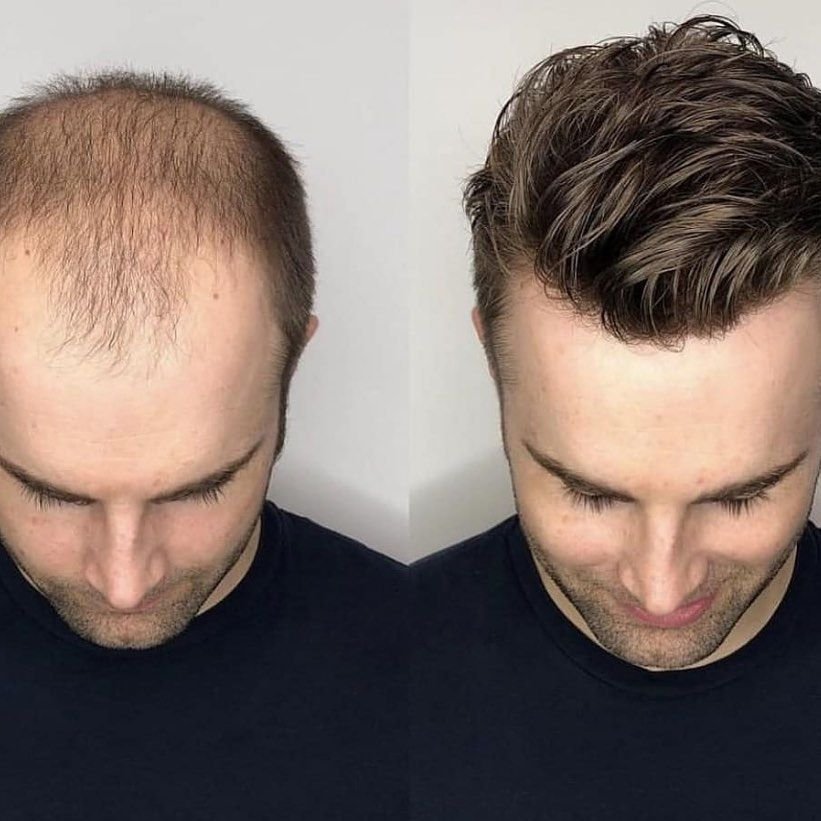
What is Hair Transplant?
A hair transplant is a surgical procedure that restores hair by moving healthy hair follicles from one area of your body (usually the back or sides of the scalp, called the donor area) to areas where hair has thinned or stopped growing (the recipient area). It’s a permanent solution for hair loss, creating natural-looking results that blend seamlessly with your existing hair.
Key Facts:
- It’s the most effective long-term treatment for pattern baldness worldwide
- Over 1 million procedures are performed annually in India alone
- It affects men more commonly (70% of cases), but women make up 20-30% of patients
- The good news: Transplanted hair grows naturally for life and is resistant to further balding
- In India, it’s highly affordable and accessible, with success rates of 90-95%
What Causes Hair Loss Requiring a Transplant?
The primary cause is androgenetic alopecia (pattern hair loss), where hormones (like DHT) shrink hair follicles over time. This leads to gradual thinning on the crown, temples, or hairline.
Common triggers include:
- Genetics: If family members have baldness, your risk increases by 80%
- Hormonal changes: Androgens in men or postpartum/thyroid issues in women
- Aging: Starts as early as 20s, affecting 50% of men by age 50
- Medical conditions: Thyroid disorders, autoimmune diseases, or medications (e.g., chemotherapy)
- Lifestyle factors: Poor diet, smoking, or chronic stress may accelerate it It’s NOT caused by frequent hair styling, dandruff, or wearing hats.
How to Recognize if You Need a Hair Transplant?
Main signs to watch for:
- Progressive thinning or receding hairline forming an “M” shape
- Thinning on the crown creating a visible scalp
- Donor area (back/sides) remains thick and healthy
- Hair that feels finer or breaks easily
Other symptoms:
- Itching or burning in thinning areas (in 10-20% of cases)
- Reduced hair density visible in photos over time
- Emotional impact: Anxiety about appearance, affecting 60% of sufferers’ confidence If hair loss is stable for 1-2 years, you’re likely a good candidate.
Types of Hair Transplant
The procedure comes in different forms based on technique:
| Type | What Happens | How Common | Outlook |
|---|
| FUT (Follicular Unit Transplantation) | Strip of scalp removed from donor area, dissected into grafts, and implanted | 20-30% of cases | Higher graft yield (up to 4,000); linear scar but covered by hair; full results in 9-12 months |
| FUE (Follicular Unit Extraction) | Individual follicles extracted and implanted; no strip | 60-70% of cases | Minimal scarring, faster recovery; ideal for short hair; 90-95% success rate |
| DHI (Direct Hair Implantation) | Grafts implanted directly with a pen-like tool for precision | 10-15% of cases | No shaving needed; natural angle control; results in 6-12 months |
| Robotic FUE | AI-assisted extraction for accuracy | Emerging (5%) | Reduces human error; quicker procedure; high precision for dense packing |
Diagnosis for Hair Transplant
Diagnosis is thorough to ensure you’re a suitable candidate:
- Questions about your history: When did thinning start? Family baldness? Medical issues?
- Physical examination: Scalp analysis for donor density and loss pattern (Norwood scale for men, Ludwig for women)
- Blood tests: Check thyroid, iron, vitamin D (deficiencies common in India)
- Trichoscopy or biopsy: Magnified scalp view or sample if scarring alopecia suspected Tip: Consult a board-certified dermatologist or hair surgeon early; avoid if hair loss is unstable.
Treatment Options
Standard Procedures
1. FUT Strip Method
- How it works: Removes a strip, stitches donor site, implants grafts
- Success rate: 85-90% graft survival
- Side effects: Linear scar; 10-14 day recovery
- Best for: Extensive balding needing 3,000+ grafts
2. FUE Extraction
- How it works: Punches out follicles one-by-one
- Success rate: 90-95%
- Timeline: Visible growth in 3-6 months
- Side effect: Temporary redness; swelling for 2-3 days
3. DHI Implantation
- How it works: Direct placement without pre-made incisions
- Success rate: 92%
- Best for: Natural hairlines; women
- Note: More time-intensive but precise
4. PRP (Platelet-Rich Plasma) Support
- How it works: Your blood’s platelets injected to boost graft survival
- Success rate: Enhances results by 20-30%
- Timeline: Combined with transplant for faster healing
Modern Advanced Treatments (2025)
Robotic and AI-Assisted Transplants
- ARTAS or NeoGraft systems: Robotic arms extract with 98% accuracy; FDA-approved
- How it works: 3D scalp mapping for personalized plans
- Upadacitinib-enhanced protocols: Expected widespread use by late 2025 for better follicle activation
Other innovative options:
- Stem Cell Therapy: Uses adipose-derived cells to regenerate follicles; 70-80% density improvement in studies
- Exosome Injections: Nano-vesicles from stem cells; 40% faster regrowth, non-surgical add-on
- Laser-Assisted FUE: Low-level lasers during procedure; 25% better survival, painless
- Hair Cloning (Emerging): Lab-multiplied follicles; trials show promise for unlimited supply
- Microneedle Implantation: Precise, scarless; reduces procedure time by 30%
Natural Ways to Support Hair Growth
While surgery is key, these habits maximize results:
Eat smart:
- Protein-rich: Eggs, lentils, fish for keratin building
- Indian superfoods: Amla, curry leaves, fenugreek seeds
- Biotin sources: Nuts, spinach, yogurt
- Antioxidants: Green tea, tomatoes
Reduce inflammation:
- Zinc supplements: 15mg daily (common deficiency in India)
- Omega-3s: From flaxseeds or supplements
- Avoid smoking (increases DHT by 20%)
Scalp care:
- Gentle oil massages with coconut or rosemary twice weekly (boosts circulation)
- Aloe vera gel for soothing post-op
- Avoid tight hairstyles
Stress management:
- Meditation or pranayama (reduces cortisol flares by 15%)
- 7-8 hours sleep nightly
- Support groups for emotional boost
Important Facts About Recovery
Good news:
- 90% of patients return to work in 3-7 days
- Transplanted hair sheds initially (shock loss) but regrows stronger
- Full density in 6-12 months; permanent results
Realistic expectations:
- Mild swelling/itching for 1 week
- 10-20% of grafts may not take initially
- Annual PRP maintenance prevents further loss
Coping Tips
Managing appearance:
- Camouflage fibers (e.g., Toppik) for instant coverage
- Scalp micropigmentation for illusion of density
- Wigs or hair systems during early recovery
Emotional support:
- Join online forums like HairLossTalk
- Counseling for body image concerns
- Remember: It’s cosmetic, not health-threatening
When to See a Specialist
See a hair transplant surgeon if:
- Hair loss has stabilized for 12+ months
- Donor area is sufficient (density >40 follicles/cm²)
- You’re over 25 (to predict pattern)
- Seeking advanced options like robotics
Find help:
- Choose clinics with 10+ years experience (e.g., in Chennai/Ambattur)
- Ask about FUE success rates and post-op guarantees
- Get a customized plan with graft estimate
Summary
Hair transplant is a proven, life-changing solution for permanent hair restoration, with high success rates and natural outcomes. Early assessment and choosing the right technique yield the best results. With 2025’s robotic and regenerative advances, plus lifestyle tweaks, you can achieve fuller, confident hair.
You’re not alone—millions regain their look successfully every year.